
How Airport’s Check-in, Boarding, and Baggage System Works

How to Build a Successful Career in the Travel and Tourism Industry Without Having Any Experience
1 May 2026
Why Sustainable Tourism is Becoming the Future of Travel
19 May 2026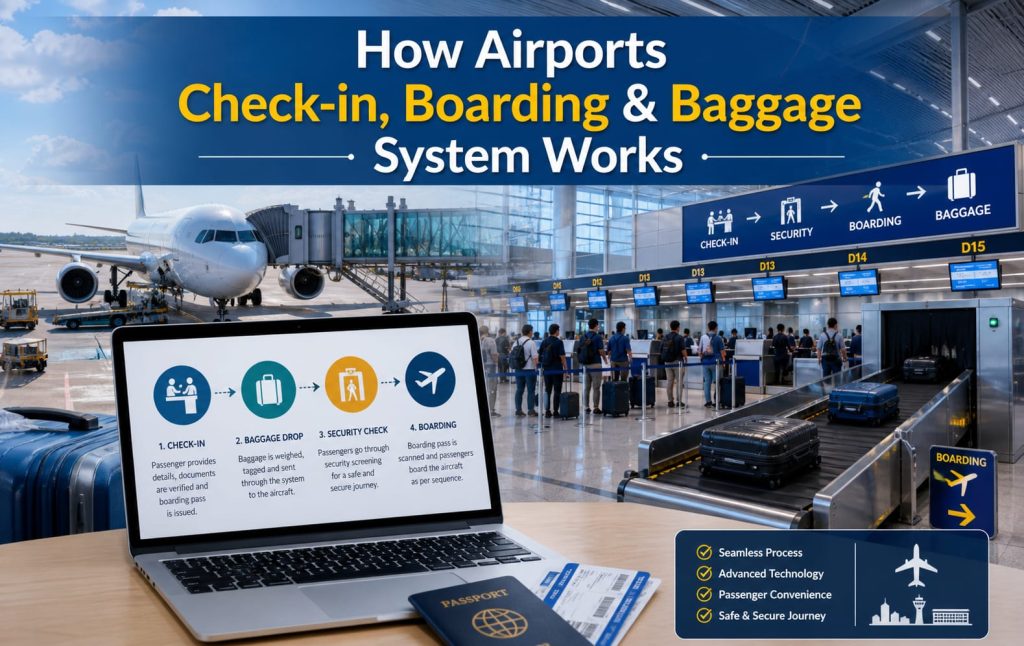
How Airport’s Check-in, Boarding, and Baggage System Works
Every day, thousands of passengers travel, which is why Airports always remain a busy place. For new travellers, the airport process may seem confusing, but everything follows a step-by-step system designed to ensure safety, comfort, and smooth movement of passengers. Understanding how check-in, boarding, and baggage handling work is very important for anyone learning about the travel and aviation industry. This knowledge also helps students prepare for travel and tourism jobs, especially in airline and airport operations.
Let’s understand the complete process in a simple and clear way.
1. Airport Check-in Process
The check-in process is the first step of your journey. It confirms that you are present for the flight and allows the airline to issue your boarding pass.
a) Types of Check-in
There are three main ways:
-
Airport Counter Check-in: Passengers visit the airline counter. Staff checks your ID, booking details, and luggage.
-
Web Check-in: Passengers check in online through the airline’s website or app.
-
Self Check-in Kiosks: Machines at the airport where passengers can print boarding passes themselves.
b) What Happens During Check-in?
-
Identity verification: Your ID card and ticket are checked.
-
Seat selection: You can choose or change your seat.
-
Baggage drop: If you have luggage, it is weighed and tagged.
-
Boarding pass issue: The airline gives you the boarding pass for the flight number, gate number, and seat number.
The check-in step ensures that the airline has updated information about every passenger on the flight.
2. Security Check After Check-in
After check-in, you move toward the security check, which is mandatory for all passengers. Security staff checks:
-
Your handbag
-
Electronic items
-
Liquids (allowed only in limited quantities)
-
Boarding pass
-
Your physical screening through a metal detector
This step ensures safe air travel by preventing prohibited items from entering the aircraft.
3. Boarding Process (Getting on the Aircraft)
Boarding is the final step before entering the aeroplane.
a) Waiting at the Boarding Gate
After security, passengers reach the boarding gate area. The gate number is printed on the boarding pass. Screens at the airport also display gate information.
b) Boarding Announcement
Airlines call passengers in groups to avoid crowding:
-
First: Special needs passengers, infants, and the elderly
-
Then: Business class or priority passengers
-
Finally: Economy class in small groups
c) Scanning the Boarding Pass
At the gate, airline staff scan your boarding pass. This updates the airline system that you have entered the aircraft.
d) Entering the Aircraft
Passengers either walk through:
-
Aerobridge, or
-
Airport bus (for remote stands)
The cabin crew greets passengers, helps them find seats, and ensures safety rules are followed.
4. How Airport Baggage System Works
The baggage system is one of the most complex and interesting parts of airport operations. Thousands of bags travel along with passengers every day. The airport uses technology and strict procedures to make sure each bag reaches the correct aircraft.
a) During Check-in: Bag Tagging
At the airline counter:
-
Your bag is weighed.
-
A bag tag with a barcode is attached.
-
This tag stores your flight number, destination, and passenger details.
The barcode helps the baggage system track your bag throughout the journey.
b) Baggage Conveyor System
After tagging, the bag moves through a long belt system where:
-
Security Screening: Baggage scans detect harmful items.
-
Sorting System: Automatic machines sort bags according to flight number.
-
Loading Zone: Airport staff place the bags into special ULD containers or baggage carts.
c) Loading Bags into the Aircraft
Ramp staff loads baggage into the cargo compartment of the aircraft. Bags are arranged carefully to balance aircraft weight.
5. What Happens to Baggage After Landing?
Once the flight lands:
-
Bags are offloaded by ground staff.
-
They are placed on baggage carts or containers.
-
Bags are delivered to the arrival baggage belt.
-
Passengers collect their bags using their bag tags.
If a bag is delayed or missing, passengers report it to the airline at the Lost & Found counter, where the bag is tracked using the barcode system.
6. Why Understanding This System Matters
For students studying travel and tourism, knowing the complete airport process is important because:
-
It helps in handling customer queries confidently.
-
It builds an understanding of airline and airport operations.
-
It is useful for jobs like airport staff, travel consultants, ground handling agents, and flight coordinators.